Drones for children and toy drones

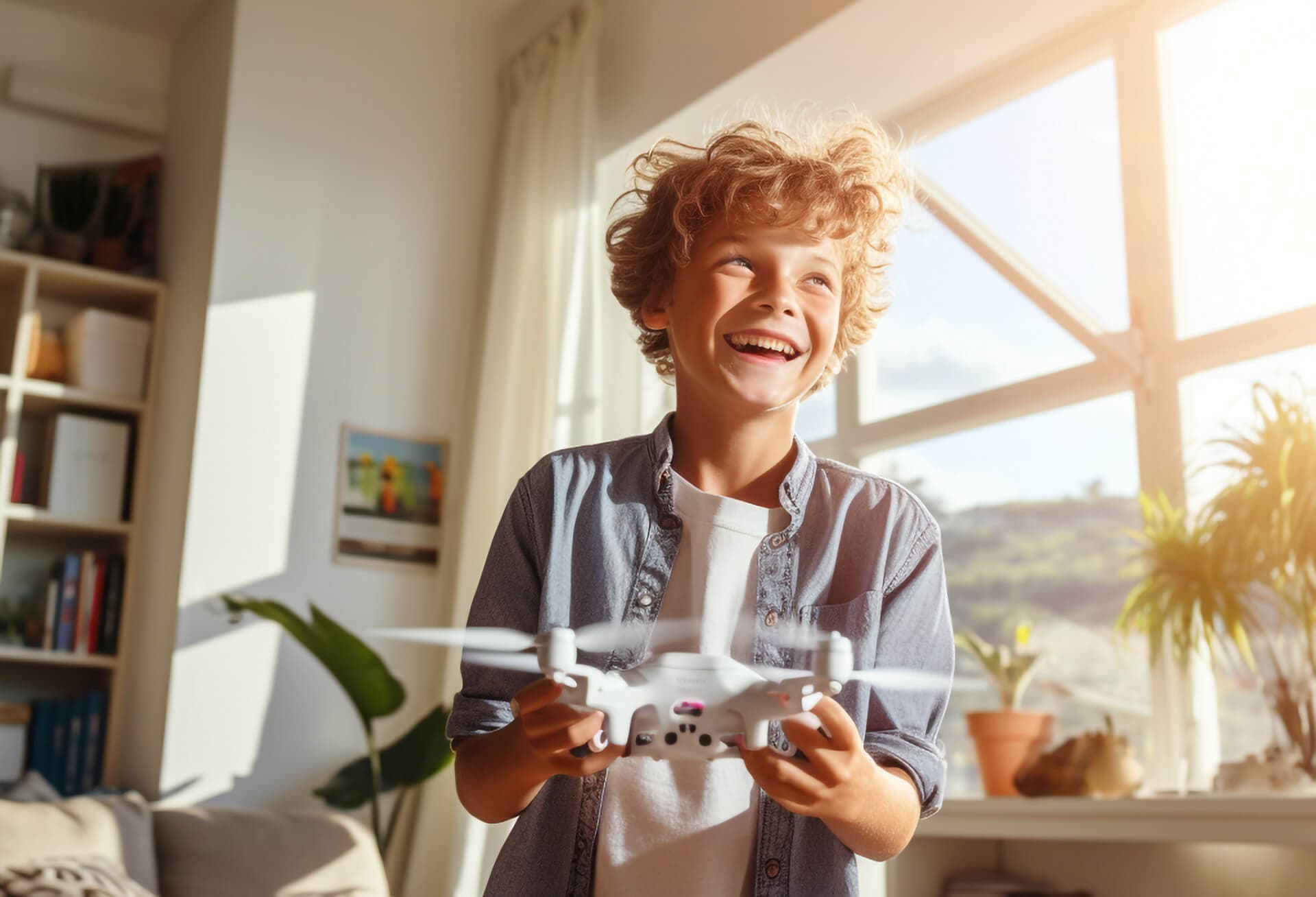
Drones for children and toy drones should be age-appropriate and place particular emphasis on safety and accessibility. In this article, we tell you exactly what you should look out for and which models are suitable.
In a world that is becoming more and more digital, drones for children have conquered a firm place. Whether you’re looking for a fun gift for your offspring or a way to satisfy your child’s technological curiosity, drones can be the answer. But what are the considerations when buying and operating these flying wonders?
List of popular drones for kids
In the following list, we first provide you with the top 10 drones for kids. We then explain what is important when choosing suitable drones for children and what aspects there are to consider.
Our tip: For the first steps in the world of drones, we recommend inexpensive and small drone models for children. In addition, they should only fly indoors in the beginning. Anyone flying outside is participating in air traffic and must observe comprehensive regulations (see below).
Only when the child’s interest is really aroused and the necessary flying skills have been developed should larger and more expensive models be considered. Those who are interested can jump directly to the paragraph High-quality drones for children.

- BUNTE LICHTER: Korffe Kinder Mini-Drohne hat 6 Arten von einstellbaren bunten Lichtern, nach Ihren Wünschen oder verwenden Sie die Szene jederzeit auf verschiedene Lichter zu wechseln, und Freunde eine Drohne Luftrennen zu starten, in einem 360 ° Flip zur gleichen Zeit beim Umschalten der Lichter, werden Sie das Lob der Freunde ernten.In der Dunkelheit der Nacht, ist die Pracht der Lichter noch schöner.
- EIGNUNG FÜR KINDER UND ANFÄNGER: einfach zu bedienen, eine Taste zum Starten und Landen, einzigartiges Design Aussehen, eine Taste Kunstflugfunktion: 360-Grad-Flip, Ringflug, niedriger Batteriestand Alarm, drei Gänge Geschwindigkeitsanpassung, Kinder können allmählich in den Betrieb qualifiziert, lernen verschiedene Schwierigkeiten in den Betrieb der Drohne Fähigkeiten, um die Kinder die Hände auf die Fähigkeit, die Fähigkeit der Hände und Gehirn zu koordinieren.
- BATTERIE LEBENSDAUER: Korffe Mini-Drohne kann kontinuierlich für 30min verwendet werden, 3 Stück Korffe Mini-Drohne wiederaufladbare Batterien kostenlos, kann jede Batterie für 10 Minuten Drohne verwenden, keine Notwendigkeit, über die Unterbrechung der Spaß, neue aktualisierte hochkapazitive Sicherheitsbatterien, begleitet das Kind jede Minute des Glücks zu verbringen, geeignete Geschenke für 6-16 Jahre alte Kinder, er (sie) wird eine unvergessliche Zeit haben! Glückliche Zeit.
- SICHERHEIT & HALTBARKEIT: Korffe Mini-Drohne ist neu aufgerüstet, keine Notwendigkeit, über den Flügel Kollision Schaden zu kümmern. Wir haben Ihnen 8 Flügel gegeben, zwei verschiedene Farben, manuell DIY Ihre Lieblingsfarben Ihre eigene Drohne zu schaffen. Abnehmbare Flügel Design ermöglicht es Ihnen, die Haarlinie Verwicklungen auf den Flügeln in der Zeit zu reinigen, so dass Ihre Drohne nicht in der Lage sein, wegen der Verwicklungen zu fliegen, Erheblich erhöht die Lebensdauer der Drohne.
- 100%IGE QUALITÄT DES KUNDENDIENSTES: In der Verpackung finden Sie eine umfassende, übersichtliche und leicht verständliche Bedienungsanleitung. Wenn Sie Fragen oder Probleme haben, kontaktieren Sie uns bitte. Wir garantieren, Ihr Problem innerhalb von 24 Stunden zu lösen, um sicherzustellen, dass unsere Kunden mit unserem Kundenservice 100% zufrieden sind. Hinweis Die Handfernbedienung benötigt drei AAA-Batterien (nicht im Lieferumfang enthalten)

- 【Kinderfreundliche RC-Drohne】Die RC-Drohne verfügt über Ein-Knopf-Start/Landung und Höhenhaltung, die stables Schweben ermöglicht – perfekt für Einsteiger. Mit einer simplen 360°-Salto-Taste zeigt die Drohne spektakuläre Kunstflug-Manöver für endlosen Spaß. 2 Geschwindigkeitsstufen, Propellerschutzabdeckung und Überhitzungsschutz machen diese Drohne ideal für Jugendliche und Anfänger.
- 【Beeindruckende Lichteffekte】Diese Mini-Drohne bringt Spaß für Groß und Klein. Die vier Schutzrahmen sind mit farbenfrohen LED-Lichtern ausgestattet – 6 Lichteffekte zum Wechseln. Dies sorgt nicht nur für atemberaubende Lichtshows, sondern verbessert das Flugerlebnis, besonders nachts. Kinder werden von der spektakulären Beleuchtung begeistert sein!
- 【Crashsicher & Robust】Die Mini-Drohne besteht aus stoßfestem ABS-Material mit Vollschutzdesign: Propellerschutzringe und dämpfende Strukturen absorbieren Stöße bei Abstürzen.
- 【Lange Akkulaufzeit】Dank 3 wechselbarer Akkus (je 9-10 Minuten Flugzeit) gibt's dreifachen Spielspaß ohne Pause. Einfacher Batteriewechsel für ununterbrochenen Fun!
- 【Perfektes Kreativgeschenk】Ideal für Kinder ab 6 Jahren: Fördert räumliches Denken, Reaktionsfähigkeit und lockt vom Bildschirm weg. Ein gesundes Outdoor-Hobby! Ideales Geschenk für Weihnachten, Geburtstag oder Schulabschluss.

- 【Einfache Steuerung – Ideal für Kinder und Anfänger】Drohne für kinder verfügt über Ein-Knopf-Start/Landung 360°-Flips und Kreisflug ist diese– perfekt für Kinder und Einsteiger. Mit nur einem Knopfdruck kann die Drohne spektakuläre Kunstflugfiguren ausführen und sorgt so für endlosen Spaß.
- 【Robustes Design & Coole Flugtricks】Unsere RC-Flugzeug-Drohne besteht aus stoßfestem EPP-Schaumstoff und verfügt über geschützte Propeller – ideal für robuste Einsätze und harte Landungen. Kinder können aufregende Manöver wie 360°-Flips, Kreisflug, automatische Drehung und sanfte Richtungswechsel ausführen – für Indoor- und Outdoor-Spielspaß.
- 【Perfekt für draußen – Spiel & Abenteuer im Freien】Ob im Park, Garten oder auf einer freien Wiese – mit dieser ferngesteuerten Flugzeug-Drohne erleben Kinder echtes Flugvergnügen. Flüge vorwärts und rückwärts durch die Luft geben ihnen ein tolles Kontrollgefühl und machen jedes Outdoor-Abenteuer unvergesslich.
- 【Drohne mit extra langer Akkulaufzeit】 Die Drohne wird mit zwei austauschbaren Akkus geliefert (jeweils 8–10 Minuten Flugzeit), sodass Sie doppelten Flugspaß genießen können, ohne sich Gedanken um die Akkulaufzeit machen zu müssen. Der Akkuwechsel ist kinderleicht, damit Sie die Freude am Fliegen voll auskosten können! Hinweis: Die Fernbedienung benötigt 3 AAA-Batterien (im Lieferumfang enthalten). Sofort flugbereit!
- 【Einfache Kunststücke & Spielspaß】Mit der Ein-Knopf-Flugfigurenfunktion können Kinder einfache 3D-Rollen und sanfte Drehungen ausführen – ganz ohne komplizierte Steuerung.So erleben sie echten Flugspaß und lernen spielerisch die Grundlagen der Steuerung eines ferngesteuerten Flugzeugs.Ein großartiges Geschenk für kleine Piloten, die von RC Drohne oder Hubschrauber ferngesteuert begeistert sind.

- 【Kinderfreundliche RC-Drohne】Die Nigecue RC-Drohne verfügt über Ein-Knopf-Start/Landung und Höhenhaltung, die stables Schweben ermöglicht – perfekt für Einsteiger. Mit einer simplen 360°-Salto-Taste zeigt die Drohne spektakuläre Kunstflug-Manöver für endlosen Spaß. 2 Geschwindigkeitsstufen, Propellerschutzabdeckung und Überhitzungsschutz machen diese Drohne ideal für Jugendliche und Anfänger.
- 【Beeindruckende Lichteffekte】Diese Mini-Drohne bringt Spaß für Groß und Klein. Die vier Schutzrahmen sind mit farbenfrohen LED-Lichtern ausgestattet – 6 Lichteffekte zum Wechseln. Dies sorgt nicht nur für atemberaubende Lichtshows, sondern verbessert das Flugerlebnis, besonders nachts. Kinder werden von der spektakulären Beleuchtung begeistert sein!
- 【Crashsicher & Robust】Die Mini-Drohne besteht aus stoßfestem ABS-Material mit Vollschutzdesign: Propellerschutzringe und dämpfende Strukturen absorbieren Stöße bei Abstürzen.
- 【Lange Akkulaufzeit】Dank 3 wechselbarer Akkus (je 9-10 Minuten Flugzeit) gibt's dreifachen Spielspaß ohne Pause. Einfacher Batteriewechsel für ununterbrochenen Fun!
- 【Perfektes Kreativgeschenk】Ideal für Kinder ab 6 Jahren: Fördert räumliches Denken, Reaktionsfähigkeit und lockt vom Bildschirm weg. Ein gesundes Outdoor-Hobby! Ideales Geschenk für Weihnachten, Geburtstag oder Schulabschluss.

- Infrarotsensor für präzise Flugsteuerung: Dank modernster Infrarot-Sensortechnologie lässt sich unsere Mini-Drohne per Gestensteuerung steuern. Einfach einschalten, abheben und schon hebt sie automatisch ab. Wenn Sie nicht interagieren, schwebt sie durch den Raum und ändert automatisch Höhe und Richtung. Auch mit den Händen lässt sich die Drohne interaktiv steuern. Legen Sie Ihre Hand auf die Unterseite oder Seite der Mini-Drohne, und sie ändert Höhe und Richtung entsprechend. Fliegen war noch nie so einfach
- Langlebig und sicher: Das Gehäuse unserer Mini-UFO-Drohne besteht aus hochwertigem PP-Material und ist dadurch weich, sicher und langlebig. Dank der integrierten Propeller kann sich Ihr Kind nicht an den Rotorblättern verletzen, sodass die Drohne absolut sicher in der Hand liegt. Trifft die Drohne auf ein Hindernis, bremst sie ab und stoppt automatisch, sodass Möbel und andere Gegenstände nicht beschädigt werden
- USB-Ladeoptionen: Im Lieferumfang ist ein USB-Ladekabel für Powerbanks, Laptops, Netzteile, tragbare Ladegeräte und mehr enthalten. Eine vollständige Aufladung dauert 40 Minuten und ermöglicht 8 Minuten ununterbrochene Flugzeit. Hinweis: Wenn die Kontrollleuchte rot leuchtet, befindet sich die UFO-Drohne im Akku-Low-Power-Modus
- Genießen Sie Spaß jederzeit und überall: Der Mini-UFO-Flugball ist leicht und flexibel und daher einfach zu transportieren. Er benötigt wenig Platz und kann unabhängig vom Raum drinnen oder draußen gespielt werden. Er eignet sich perfekt für die Eltern-Kind-Interaktion und Flugherausforderungen mit Freunden
- Ein perfektes Geschenk für Jungen und Mädchen: Die schwebende Mini-Balldrohne ist ein lustiges, interaktives Flugspielzeug, das die Reflexe von Kindern trainiert und ihre geistige Beweglichkeit verbessert. Ob zu Weihnachten oder zum Geburtstag – sie ist ein ideales Geschenk für Jungen und Mädchen im Alter von 6 bis 14 Jahren

- 【FPV-Drohnen mit Kamera Live-Video 120°Wide-Angle HD 4K】Mit dem FPV können Sie 120°Wide-Angle 4K HD-Foto und Video an dem Ort aufnehmen, den Sie wollen. F89 verfügt über FPV Echtzeit-Übertragung durch das App-System. Fotos / Videos mit Gesten automatisch.
- 【Faltbare Drohne mit langer Flugzeit 】 Mit zwei verbesserten Batterien können Sie mit der Drohne für faltbare & flexible Blätter machen die Drohne klein und tragbar. Sie brauchen die Drohne nicht zu registrieren oder einen Drohnenpilotenschein zu bekommen.
- 【Drone mit Dual-Kameras / Optische Flusspositionierung】 Die HD-Frontkamera und die untere optische Flusskamera können umgeschaltet werden, so dass Sie sowohl wunderbare Echtzeitbilder vom Himmel als auch von der Geländesituation unter dem Flugzeug haben. Der Quadcopter ist höhenverstellbar.
- 【Alle Funktionen】 Automatischer Schwebeflug ( Automatischer Schwebeflug) / Höhenhaltung, Ansicht in der ersten Person (FPV), Start & Landung mit einer Taste, Drehung mit einer Taste / Folgen mir, Trajektorienflug, wendig fliegen & mehr. Eine tolle Spaßdrohne mit Kamera für Erwachsene.
- 【Sicherer Flug & Dauerhaft】 Schutzgitter und Verbundwerkstoff Flugzeugkörper Material hinzugefügt Haltbarkeit für harte Landungen oder Abstürze, so nicht nur eine ideale Drohne für Erwachsene, sondern auch ein perfektes Geschenk Drohne für Anfänger -Kinder.

- 【Mini drohne】: 120°Wide-Angle HD-Foto und Video an dem Ort . Bildübertragung sehen Sie gewünschte Szene über App echtzeitig.zusammen mit dem stabilen Schwebeeffekt unserer drohne für kinder, gibt Ihnen ein noch besseres Fotografie-Erlebnis.um Ihre schöne Momente lebendiger darzustellen.
- 【1080P HD Kamera & 90° Einstellbar】: Drohne mit kamera kinder bietet 1080P HD Kamera 90° verstellbarem Winkel für klare Aufnahmen. Perfekt für Kinder und Anfänger! Optischer Flussortung und modularer Batterie für stabile Flüge.
- 【360° drehen】: Drücken Sie die Flip-Taste und steuern Sie den rechten Joystick, wird die mini drohne mit kamera 360° in der Luft drehen. Drücken Sie die ""One Key Start/Landing""-Taste, und die Drohne wird automatisch starten oder landen. Die Kamera Drohne verfügt über insgesamt 3 Fluggeschwindigkeitsmodi, niedrige Geschwindigkeit für Kinder und Anfänger.
- 【Multifunktionale Drohne】: Drohne bietet benutzerfreundliches Design und Multi-Funktionen, 3 Geschwindigkeiten, Headless-Modus, eine Taste Start / Landung, optische Strömung Positionierung Funktion machen die Drohne leichter zu kontrollieren. 360°-Flip, Trajektorienflug, Schwerkraftkontrolle und andere Funktionen bringen endlosen Flugspaß.
- 【Faltbare Drohne】: Zusammenklappbares Design für kleinere Lagerung, doppelt zusammenklappbare Auslegerflügel sind bequemer zu tragen, die Größe ist genau richtig, leicht zu tragen, leicht zu transportieren, leicht für Reisen zu packen, genießen Sie den Spaß an Luftaufnahmen, Multi-Erlebnis-Flugmodus.

- Drohne mit HD-Kamera: Mini-Drohne mit 720P HD Kamera, mit der Sie besser klare Fotos und Luftvideos aufnehmen können. Mit dieser Drohne können Sie wunderschöne Landschaften aus dem Live-Video-Feed über das Smartphone sehen.
- Drohne mit lebendigem Licht: Der Quadrocopter ist mit ultrahellen grünen und blauen LED-Leuchten verziert und bietet Ihnen leistungsstarke Lichteffekte und ein supercooles Flugerlebnis. Es hilft Ihnen auch, Ihre Richtung nachts leicht zu erkennen.
- Beste Drohne für Kinder und Anfänger: Die mini drohne ist einfach zu starten, tippen Sie einfach auf die Start-/Landetaste mit einer Taste. Headless-Modus und 3 Geschwindigkeitsmodi, die für Piloten verschiedener Niveaus geeignet sind. Attitude Hold kann die Drohne auf einer bestimmten Höhe halten, um die Steuerung zu erleichtern.
- Stunt-Drohne Mehr Spaß: Die ferngesteuerte drohne verfügt über mehrere Funktionen wie 360 ° Flip, Kreisflug, Gesten-Selfie und Schwerkraftsensormodus usw. Der Alarm bei niedrigem Batteriestand erinnert Sie daran, die Drohne zurückzurufen, um zu vermeiden, dass sie verloren geht.
- Leistungsstark und sicher: 3 Akkus sorgen für eine dreifache Flugzeit, die 18-22 Minuten unterstützen kann. Die modulare Batterie ist einfacher zu installieren, sicherer zu laden und länger zu fliegen. Kinderfreundlicher Propellerschutz für erhöhte Sicherheit und Haltbarkeit, beste Drohne für Kinder.
Legal aspects for children’s drones
There are also some legal aspects to consider for drones for children:
- Minimum age: According to the EU Drone Regulation and German law, the minimum age for drones is 16 years (18 years in Austria).
Drones that have been classified as toys according to Directive 2009/48/EC are exempt from this. This should be taken from the product description of the respective drone.
„Products intended or designed – exclusively or not – to be used for play by children under 14 years of age“ – 2009/48/EC- The minimum age can be circumvented if a child flies the drone under the supervision of a person who has reached the minimum age and meets all other legal requirements. Then children are also allowed to fly drones apart from toy drones.
- Compulsory insurance: When flying drones, liability insurance must always be in place. This must explicitly cover drone flights.
- Obligation to register as a drone operator (not for toy drones according to Directive 2009/48/EC or drones without a camera)
- A drone licence plate with registration number(eID) of the drone pilot is necessary if the registration obligation applies.
Anyone who decides to fly with their child outside the four walls, i.e. outdoors, is inevitably taking part in air traffic and must observe a number of other regulations. These are laid down in the EU Drone Regulation.
Why are special drones for children important?
The world of drones is diverse. But not every drone is suitable for everyone – especially not for children. Children have different needs and abilities than adults, which is why children’s drones are specially designed for them.
Safety features: The drone should be suitable for the age of the child. It is clear that drones for children have special features that make them suitable for children. This starts with robustness and ends with special safety features that ensure safe flight and handling. For example, protective devices around the drone’s propellers or limits on flight altitude and speed.
Accessibility: Children can easily be overwhelmed by complex controls and numerous functions. This is where child-safe drones come in, which have simplified drone controls. This not only minimises the risk of accidents, but also ensures that the child does not give up in frustration. Children’s hands are smaller and less dexterous than adults‘. Therefore, the controls and design of drones for children are often more compact and ergonomic for ease of use.
Learning factor: A drone for children should be more than just a toy. It should also serve as an educational tool that piques the child’s curiosity and encourages them to learn more about technology and science. A drone for beginners should therefore be easy to understand and encourage fun learning.
Choosing a special drone for children therefore not only ensures flight safety, but also that the young pilot enjoys flying while constantly learning.
What makes a good children’s drone?
Before you pull out your wallet, let’s briefly summarise what makes a good drone for kids.
- Size and weight: It should be light and easy to handle.
- Easy controls: Intuitive controls help with learning and avoid frustration.
- Safety features: Features like propeller protection or automatic landing functions are a must.
- Durability: Children are not always squeamish. A robust construction prevents premature defects.
- Flight range: Limited range and speed ensure that the drone does not suddenly disappear.
Should the drone for children have a camera?
Whether a drone for children should have a camera depends on various factors and is a frequently asked question among parents. Here are some aspects that should be considered when making a decision:
Advantages of having a camera in a drone for kids
Learning opportunities: A camera can help the child develop a better understanding of photography and videography. It learns to think from different perspectives and can capture fascinating footage from the air.
Enhanced playtime fun: Filming and photographing from a bird’s eye view makes flying the drone an even more exciting experience. Viewing and editing your own footage later can be a lot of fun.
Encouraging creativity: Children can let their creative side out when creating videos and photos by telling stories from a bird’s eye view or integrating their recordings into various projects.
Concerns about cameras in children’s drones
Privacy: Filming and photographing from the air can lead to privacy issues, especially when filming other people or private property without their consent.
Additional costs: Drones with high-quality cameras are usually more expensive. If the camera function is not used regularly, these extra costs may be unjustified.
Increased complexity: Having a camera can make operating the drone more complicated. The child not only has to learn how to fly, but also how to use the camera.
Weight and flight time: Cameras and the associated technology can increase the weight of the drone and thus shorten the flight time.
By the way, here you can find a list of the best camera drones.
High-quality drones for children
If the models for children presented above are too much of a toy for you and you trust your child to do more, as well as having a larger budget, you can fall back on higher-quality drones for children. These are completely in line with our recommendations for the best entry-level drones. Therefore, we refer you to the separate article. Drones for beginners: The best beginner drones.
However, please note our general tips for children’s drones at the top of the article!
The educational value of drones for children
Drones are not just toys. They can also be educational:
- Technological education: children learn about aerodynamics, electronics and much more.
- Drone kits: With a drone kit, children can build their own drone from scratch. This promotes technical understanding and problem-solving skills.
- Photography: Some drones offer the ability to take photographs from the air, which provides a whole new understanding of perspective.
FAQ about drones for children
Yes, but there are different regulations from country to country, especially with regard to weight and flying height. In principle, children are allowed to fly suitable drones. IM doubt under supervision. Details can be found in the article.
There are clear laws and regulations on the use of drones. Also for children’s drones. Details can be found in the article itself. An interactive map to quickly check where you can fly is available here.
As a rule, not without the consent of the landowner.
A drone designed primarily for pleasure and often has fewer technical features than more professional models. Official toy drones are labelled according to Directive 2009/48/EC.
Summary
Drones for children can be an exciting and educational gift. Pay attention to safety, quality, the correct age rating of the drone and especially the legal aspects. With the right preparation and supervision, learning to fly can be an invaluable experience for your child.
Was this article helpful?
Subscribe to our newsletter
Subscribe to our newsletter and get fresh articles on a regular basis.